Beyond UV Protection: How Rice and Probiotics Support Your Skin's Microbiome
If you've spent any time on r/SkincareAddiction or the K-beauty subreddit, you've probably seen the same question come up over and over: "Is there a sunscreen that actually functions like skincare?" Not a compromise. Not a necessary evil before stepping outside. A product that genuinely improves your skin while protecting it.
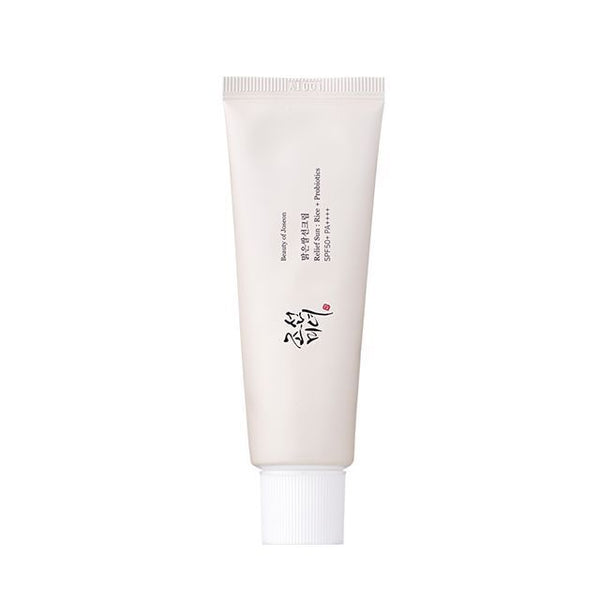
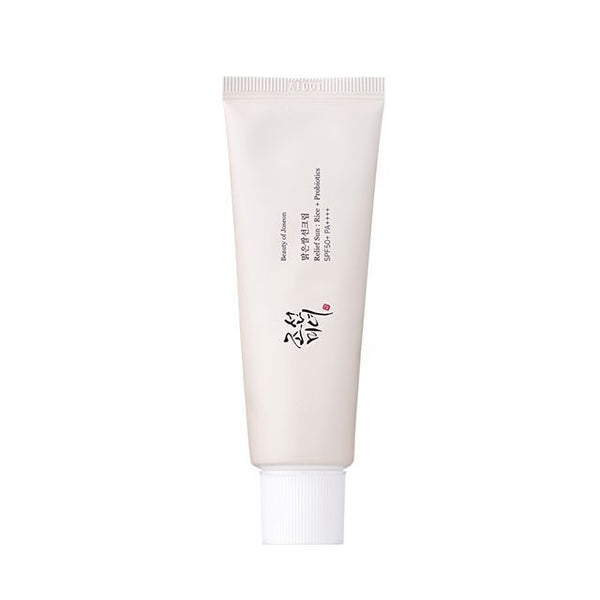
That's the exact problem the Beauty of Joseon Relief Sun was built to solve — and why it's become one of the most-discussed SPFs in the K-beauty community over the last two years.
What Most Sunscreens Get Wrong (And Why It Matters Long-Term)
Traditional Western sunscreens were engineered with one goal: block UV. That's it. The result is formulas built on heavy, occlusive bases that sit on top of the skin, disrupt the skin's natural microbiome, and — if you have darker or olive skin — leave that unmistakable chalky residue that makes you look like you lost a fight with a bag of flour.
Dermatologists are now increasingly vocal about something the K-beauty world has understood for a decade: sun protection and skin health are not separate concerns. Daily UV exposure doesn't just cause sunburn. It degrades the skin barrier, triggers chronic low-grade inflammation, and disrupts the microbial ecosystem that keeps your skin balanced. A sunscreen that weakens that system while protecting you from one type of damage is, at best, a half-measure.
The Two Ingredients Changing the Conversation
Rice Bran Extract (30%)
Rice has been a cornerstone of Korean, Japanese, and Chinese skincare philosophy for centuries — and modern dermatology is finally catching up to why. At a 30% concentration, the rice bran extract in Relief Sun delivers a meaningful dose of amino acids, antioxidants, and natural minerals directly to the skin.
The practical result: skin that looks genuinely healthier over time, not just protected. Users across forums consistently report a natural luminosity — not oily, not sparkly, just what dermatologists call basal radiance — that develops after consistent use.
Fermented Probiotic Complex
This is where the formula moves from good to genuinely interesting. Fermented probiotics in topical skincare work differently than the ceramides or peptides you might already be using. Rather than filling in gaps or stimulating production, they work symbiotically with your existing skin microbiome — the ecosystem of bacteria that regulates oil production, inflammation response, and moisture retention.
For acne-prone users, this is particularly relevant. A common root cause of adult hormonal breakouts isn't excess oil alone — it's microbiome imbalance. A disrupted skin barrier produces more sebum reactively, which feeds problematic bacteria, which triggers more inflammation. Fermented probiotics interrupt that cycle by supporting a healthier baseline.
Answering the Questions the Community Actually Asks
"Does it leave a white cast on darker skin tones?"
This comes up constantly on Reddit threads comparing SPF options for medium to deep skin tones, and the answer is definitively no — and here's the mechanism why.
White cast is a mineral sunscreen problem. Zinc oxide and titanium dioxide are physical particles that scatter light; on darker skin, that scattering reads as grey or white. Relief Sun uses advanced chemical UV filters, which absorb UV radiation at the molecular level rather than reflecting it. There are no particles sitting on the surface of your skin because the protection is happening at a biochemical layer. The finish is dewy, not chalky, and skin tones from NC15 to NC50 report the same clean result.
"Will the Rice + Probiotics formula clog my pores or cause breakouts?"
This is the right question to ask about any SPF, and it deserves a real answer rather than marketing language.
The short answer: this formula was specifically engineered for this concern. The longer answer is that most sunscreens break out acne-prone users because of the base, not the active filters — heavy silicones, occlusive oils, or comedogenic emollients that trap sebum and heat underneath a film. Relief Sun's texture is a lightweight lotion that absorbs fully. The probiotic component actively works against the microbiome disruption that triggers inflammatory acne. Multiple users across the r/AsianBeauty and r/SkincareAddiction communities with self-reported acne-prone skin have noted either no reaction or visible improvement in skin texture over time.
If you're patch-testing a new SPF (which you should always do), apply it to your jaw or inner arm for 3–5 days before full-face use.
"Can I use this as the last step in my morning routine, or do I need a separate moisturizer?"
This is one of the most practical K-beauty questions, and Relief Sun was designed with routine streamlining in mind. The rice extract base provides genuine hydration — not just occlusion — so for most skin types, it replaces a separate moisturizer in a morning routine. The standard K-beauty protocol: cleanse → toner/essence → any active serums → Relief Sun as the final step, applied generously 15 minutes before sun exposure.
For very dry skin types or during winter months, a light moisturizer before SPF may still be beneficial.
How This Fits Into a Morning Routine Built for Skin Longevity
The concept of skin longevity — protecting and maintaining skin health across decades rather than chasing short-term fixes — is one of the key shifts in how US consumers are starting to think about skincare. It's the same shift that moved consumers from crash diets to sustainable nutrition.
A longevity-focused morning routine treats SPF as the non-negotiable foundation, not the afterthought. UV damage is the single largest contributor to premature skin aging, hyperpigmentation, and barrier degradation. Everything else you spend on serums, actives, and treatments is working against an uphill battle if your SPF isn't doing its job.
The Relief Sun formula fits into that framework because it doesn't ask you to choose between protection and treatment. You're applying SPF50+ PA++++ broad-spectrum coverage and supporting your microbiome and hydrating your barrier in a single step. For a routine that's already asking a lot of your skin — especially if you're running retinol or acid exfoliants at night — that consolidation matters.
The Bottom Line
The Beauty of Joseon Relief Sun isn't a complicated product. That's the point. It does more than most SPFs with a shorter, cleaner ingredient list, a texture that works for daily wear, and zero white cast regardless of your skin tone.
If you've been tolerating your sunscreen rather than actually liking it, this is worth trying.
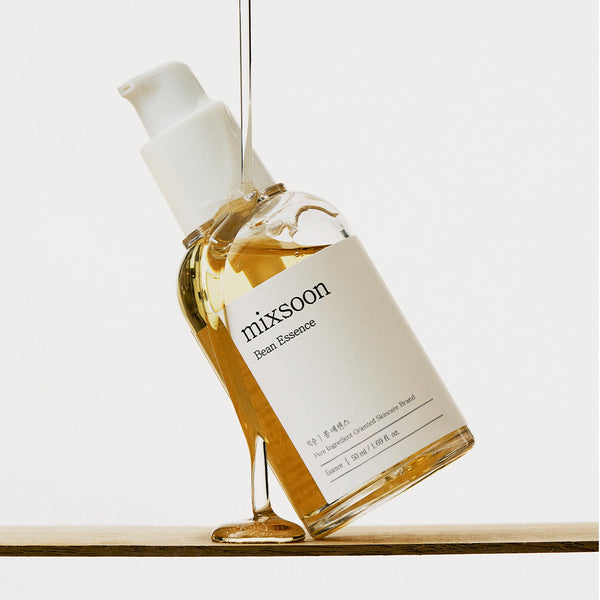
Shop the Mixsoon Glass Skin Routine at Beauxus — including the SPF50+ Relief Sun as part of a complete morning protocol built for visible, long-term results.